
Fixing What Keeps Failing
Pond Repair & Restoration in El Paso for aging systems with persistent leaks, equipment breakdowns, and water quality issues that surface-level fixes no longer resolve
Liner damage from UV degradation and thermal cycling eventually creates leaks that drop water levels overnight, forcing you to refill constantly while watching utility bills climb and wondering where the water actually goes. Pumps that once ran quietly now vibrate and overheat, filters that used to clear the water in hours leave it cloudy for days, and structural settling has created uneven edges where rocks shift and soil erodes. TLC Unlimited diagnoses the root causes behind these failures and provides repairs that address the underlying problem, not temporary patches that fail again within months.
Leak detection starts with isolating sections of the system to determine whether water loss occurs through the liner, around plumbing connections, or at waterfall and stream interfaces where movement and settling create gaps. Liner repairs involve patching punctures or replacing deteriorated sections with material that matches the existing installation, while plumbing fixes address cracked fittings and loose connections that develop as soil shifts beneath hardscape elements.
Request an on-site evaluation to identify all current system failures and prioritize repairs based on impact.
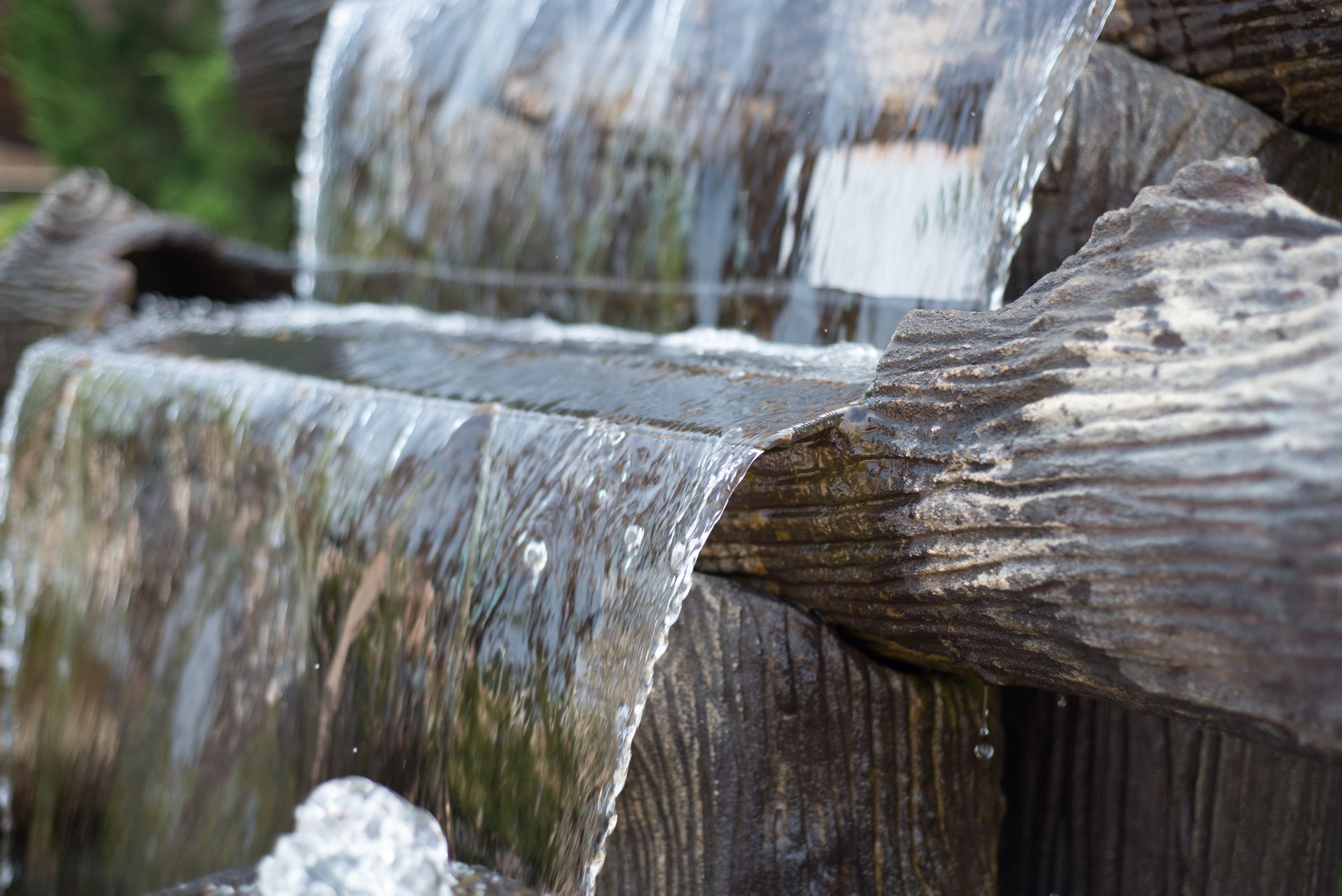
What Full Restoration Actually Accomplishes
Restoration goes beyond repairing individual components to upgrading systems that were undersized or improperly configured from the start. Pumps are replaced with models that match current flow requirements, filtration is expanded to handle the biological load your pond actually supports, and plumbing is reconfigured to eliminate low-flow zones where debris settles and water stagnates.
Once restoration is complete, the pond holds water consistently without unexplained level drops, equipment operates within normal temperature and noise ranges, and circulation reaches all areas instead of leaving dead zones where algae and sediment accumulate. Water quality stabilizes because the filtration capacity now matches the waste production from fish and plant decomposition, and you're no longer compensating for inadequate equipment with constant chemical adjustments.
Emergency repairs are available when equipment failure threatens fish health or when sudden leaks risk draining the pond entirely, but most restoration projects benefit from planned work that allows time to source correct parts and complete upgrades without rushing. TLC Unlimited provides detailed assessments that separate urgent repairs from improvements that enhance long-term performance but don't require immediate action.
Common Questions About This Service
Repair and restoration questions typically focus on whether fixing the existing system makes sense or if replacement would be more effective.
How is a leak located when it's not visibly obvious?
The water level is allowed to stabilize naturally, then sections are isolated using temporary dams or by shutting off circulation to determine whether the leak is in the basin, the plumbing network, or the waterfall structure.
What causes pump and filter failures to happen repeatedly?
Undersized equipment running constantly at maximum capacity wears out faster, and abrasive dust in El Paso accelerates wear on impellers and seals beyond what manufacturers design for in typical conditions.
When does a pond need full renovation instead of isolated repairs?
Renovation makes sense when multiple systems are failing simultaneously, when the original design didn't account for desert conditions, or when structural settling has compromised the basin integrity beyond what patching can fix.
What gets upgraded during a restoration project?
Common upgrades include larger biological filters, variable-speed pumps that reduce energy costs, UV clarifiers for persistent algae control, and reconfigured plumbing that improves flow distribution and simplifies future maintenance.
How long does a typical repair take before the pond is functional again?
Simple repairs like replacing a pump or patching a small liner tear are completed in hours, while full restorations involving structural work and system upgrades may require several days depending on scope.
TLC Unlimited evaluates whether your pond's issues stem from component failure, design flaws, or accumulated wear from environmental stress, then recommends repairs that restore reliable function. Call (915) 218-7923 to describe current problems and schedule a diagnostic visit that identifies all contributing factors.