
Removing Trees Without Damaging Your Property
Tree Removal Services in El Paso for storm-damaged trees and hazardous limbs threatening structures
A fallen cottonwood can crack a driveway, puncture a roof, or block access to your property for days. TLC Unlimited handles tree removal services across El Paso, working with homeowners who face dying trees near foundations, storm-damaged limbs over driveways, or overgrown specimens threatening power lines. The combination of high desert winds and sudden monsoon storms creates conditions where weakened trees become liabilities rather than landscape assets.
Tree removal involves cutting the trunk in controlled sections, rigging branches to prevent uncontrolled drops, and lowering large pieces using ropes and pulleys to avoid contact with nearby structures. The approach changes depending on clearance around the tree, proximity to buildings, and whether the root system has compromised nearby hardscaping. Stump grinding follows extraction, reducing the remaining base below soil level so new landscaping can take its place.
Schedule a property evaluation to identify trees that pose structural risks or require emergency extraction.
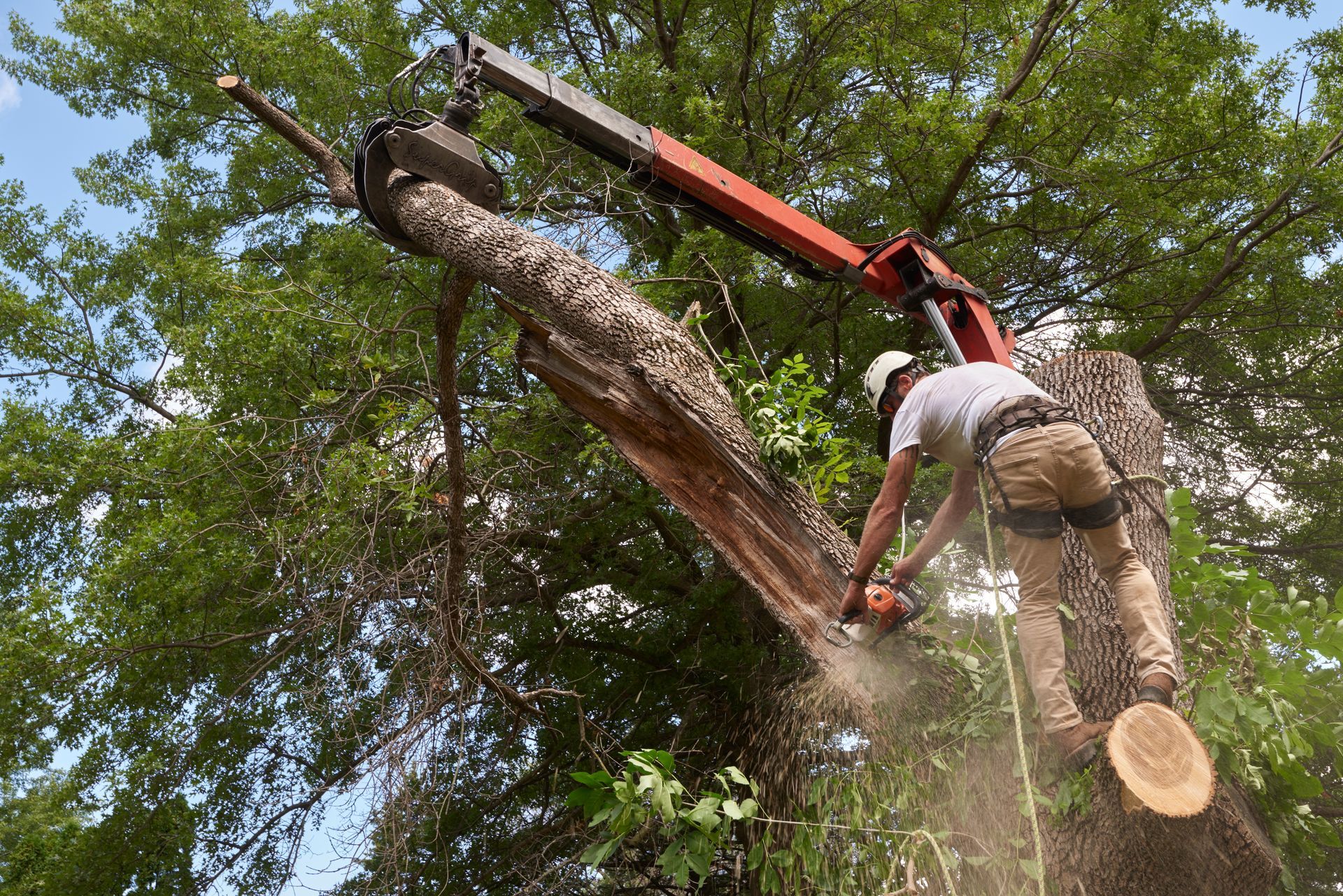
What Proper Tree Removal Requires
Controlled removal depends on directional cuts that guide each section's fall, rigging systems that support weight during descent, and equipment positioned to protect irrigation lines, concrete surfaces, and adjacent plantings. Work begins at the top, sectioning the canopy before cutting the main trunk, ensuring each piece lands in a predetermined zone away from structures and utilities.
After removal, your property no longer faces the risk of branches breaking during windstorms, roots lifting patio pavers, or canopy weight stressing weakened trunks. Stump grinding eliminates the base entirely, leaving soil level and ready for grass seed, new plantings, or hardscape installation. Debris is chipped or hauled away, clearing the area for immediate use.
Emergency removal services address trees that have already failed, partially uprooted during storms, or split at the trunk and remain precariously balanced. These situations require immediate rigging to stabilize the tree before cutting begins, preventing further property damage during extraction.
What Property Owners Usually Ask
Questions about tree removal often focus on safety measures, timing considerations, and what happens to the stump after the trunk is gone.
How is removal handled when trees are close to buildings?
Rigging systems and sectional cutting allow removal even in tight spaces, lowering each piece with ropes to control descent and prevent contact with roofs, walls, or fencing.
What factors determine whether a tree needs removal versus trimming?
Structural damage at the trunk, root decay, more than fifty percent dead canopy, or severe leaning toward structures typically indicate removal rather than corrective pruning.
When should storm-damaged trees be addressed?
Trees with split trunks, exposed roots, or large hanging branches require immediate attention, as wind or additional rain can cause sudden failure and compounding damage.
What happens to the stump after the tree is cut down?
Stump grinding reduces the remaining base six to twelve inches below grade, turning it into mulch and leaving space for replanting or hardscape installation without visible remnants.
How does El Paso's wind exposure affect tree stability?
Constant western winds stress root systems over time, and older trees with compromised anchoring become hazards during monsoon season when gusts exceed fifty miles per hour and rain saturates soil.
TLC Unlimited evaluates tree condition, surrounding structures, and access constraints before beginning extraction work. Request an on-site consultation to review removal options and discuss stump grinding as part of the overall clearing process.